By Bryant Falk
One of the most challenging types of audio recording is when the shoot takes place outside. Numerous variables start showing themselves. From car traffic and wind noise to ocean waves, leaf rustling, and rain. One of the worst modern audio culprits today is the jet airplane!
Keeping all this extraneous noise out of your shotgun mic can be a daunting task. Here are a few hints to help minimize potential audio problems as you head out into the great outdoors.
The first thing is to create as many options as is reasonably possible on your shoot. Wireless lav mics for on-location talent and boom mics will give you more options once you’re in the edit suite.
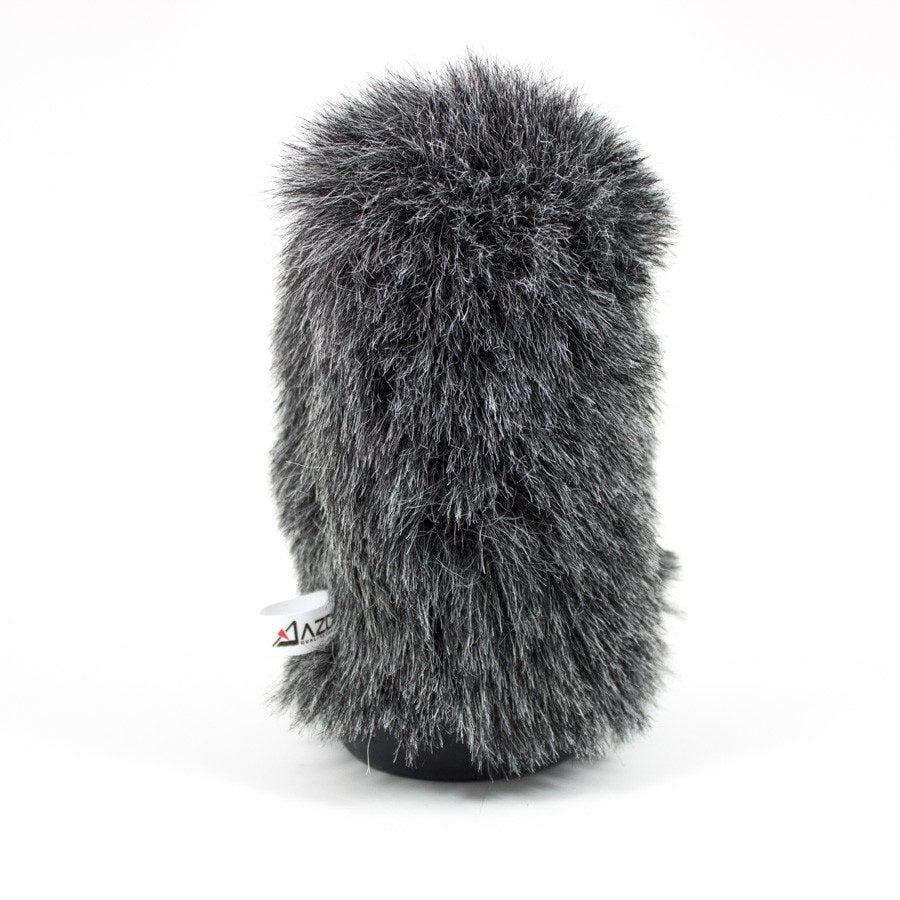
The first largest outdoor audio issue to tackle is wind noise. Even on the sunniest, most beautiful day ever, you can have wind noise challenges. Make sure to have a number of different windscreen options for your boom mic. These wind reducers are also known as “Zeppelins” or “Blimps” come in many shapes and sizes. One type you may have seen is the furry “Fuzzy” or “Mic Muff” windscreen. This type of filter gives you good protection against wind noise getting into your shotgun mic.
Other items good to have in your inventory are sound blankets. These are dense fabric materials that can be used to cover noisy audio sources such as power generators or refrigerators, (and even if not in the shot, compressors can still make a lot of noise!).
A short film called, “Winter,” (directed by Dan Seeley) takes place in a very remote location. Many of the audio issues touched upon in this article needed to be addressed on the set of “Winter”. Since much of the shoot did take place at night, what they had to deal with was those pesky generators for the lights.
The crew employed two techniques. The first was the sound blankets over the generators, and the second was distance, getting the noise source as far from the shoot location as possible. Heavy-duty extension chords or “Stingers” were used to deliver the power from the generators to the lights.
Unfortunately, some noise, such as flying “jets” overhead, cannot be controlled as easily. One recent challenge was when I had to record a cooking show next to a lake with powerboats going by. It took us three times longer counting the breaks from filming to get what we needed, but we did it.
So, as you’re heading into the great outdoors, keep an ear out for those extra sounds that may not be so welcomed in the audio suite. Be prepared with ways and options to minimize potential audio challenges when you’re shooting outside.
Bryant Falk has been a producer and engineer for over 12 years working with such clients as The Ricki Lake Show, Coca-Cola, Sports Illustrated, Valley National Bank, and MTV’s The Shop. His company Abacus Audio (www.abacusaudio.com) handles many aspects of the audio production field from creative and production to mixing and final output.
Featured in StudentFilmmakers Magazine, February 2009 Edition.
Sign Up for your own subscription to StudentFilmmakers Magazine.
- Click here to sign up for the Print Subscription.
- Click here to sign up for the Digital Subscription.
- Click here to sign up for the Bulk Subscription for Your School or Business.