Student POV: Filming with the Sony HVR-Z7U and a Custom Slider

by David Daudelin

One of my film professors told me that it’s easy to tell what’s wrong in a film. It’s a lot harder to tell what’s right. My constant goal as a student indie filmmaker is to find out how things are being done right and imitate them. In this article, I share a couple products I’ve found that make a huge difference in the quality of my films.

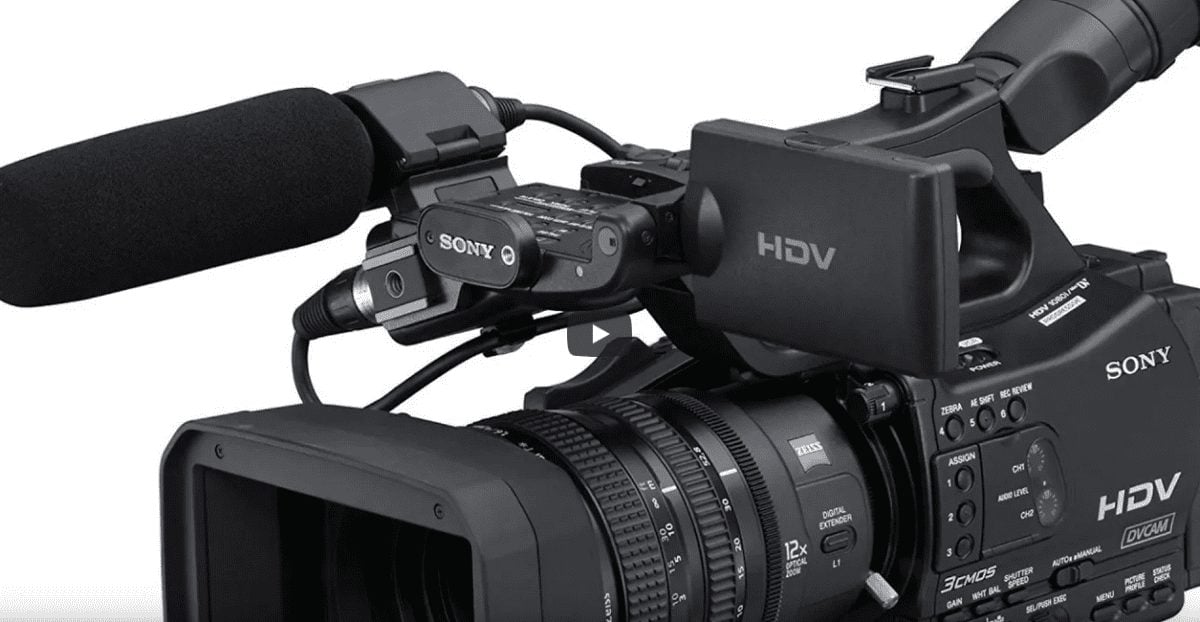
When I started filming my first serious, live-action short film, I wanted to find a video camera for around $5,000 that would give me professional results. At the time, I was unaware of the new DSLR movement so I only looked for regular video cameras. I now think it may be better that I didn’t know about DSLRs as I’ll explain later. From my research, I found an overwhelming consensus that the Sony HVR-Z7U was the best choice. Some key features about the HVR-Z7U are its interchangeable lens, digital recording unit (which allows you to record simultaneously to a mini- DV tape and a CF card), and its 3 ClearVID CMOS sensors which give it better picture quality. The lens which comes by default is very good and when I went on a shoot with a professional videographer at AOL headquarters, she kept raving about the movie quality feel of the footage. The digital recorder which attaches to the back of the unit is also a great feature. Each time you start and stop recording, it automatically creates individual AVCHD video files (with a .m2t extension) which can be directly imported into editing software like Sony Vegas or Pinnacle Studio. Alternatively, since my main editing software (Avid Studio) has a problem with these clips, I can connect it to my computer with a FireWire cable and record the footage from the mini-DV tape.

When my videographer friend got a DSLR, I asked her whether she thought I should move over to that. She said that although she liked the quality she was getting from it, the problem was achieving nice motion. One of the best features of having a larger, heavier video camera is the fact that it’s larger and heavier. Its physical characteristics, combined with the image stabilization feature on the camera and the 24p shooting mode make it automatically look more professional than the small Canon Vixia HG20 camcorder I used before. I love the controlled motion it gives me while shooting freehand without the bumps and sharp movements that come with a lighter camera.

The next significant piece of equipment I bought was a slider kit. Rather than purchase a thousand dollar pre-assembled one, I found a great tutorial online which described how to build a slider from two tripods, a DryLin W16-A Linear Motion system, and an extra fluid motion tripod head (along with a few screws and bolts). The DryLin system comes with a 3 foot track and a carriage which smoothly glides across it. You put the track on the two tripods (which can be adjusted to level the track), attach the fluid tripod head to the carriage, slide the carriage onto the track, and then attach the camera to the head. This gives you beautifully smooth horizontal trucking motion combined with pan and tilt. When I first used it in a short film, I was amazed at the beautifully professional feel it gave a few simple scenes and as a result, the production value it added to the whole project.

It’s small things like a subtle, but perfectly smooth horizontal motion from a slider or the controlled free-hand motion and high-quality footage from a professional camera that are hard to pick out but which make an enormous impact on the quality of a video. Sometimes it’s tempting to just give up and say it must take hundreds of thousands of dollars to make high quality productions. But through some relatively inexpensive and high quality devices like the Sony HVR-Z7U and the DryLin Linear Motion system, I’ve found that I can come a lot closer to professional movie quality with a much lower budget.

About Us

StudentFilmmakers.com is where creatives grow. Learn filmmaking, connect with industry pros, and access tools, contests, and inspiring educational resources.

Advertisers

Sign up for our Newsletter

Discover exclusive access to free webinars, hands-on workshops, and cutting-edge insights into emerging technologies and workflows. Sign up with the form above to stay ahead in the fast-evolving world of filmmaking.

Scroll to Top
×