Award-Winning DP Discusses Lighting for Genres, Camera Movement, Color Palette and More
by Jacqueline B. Frost
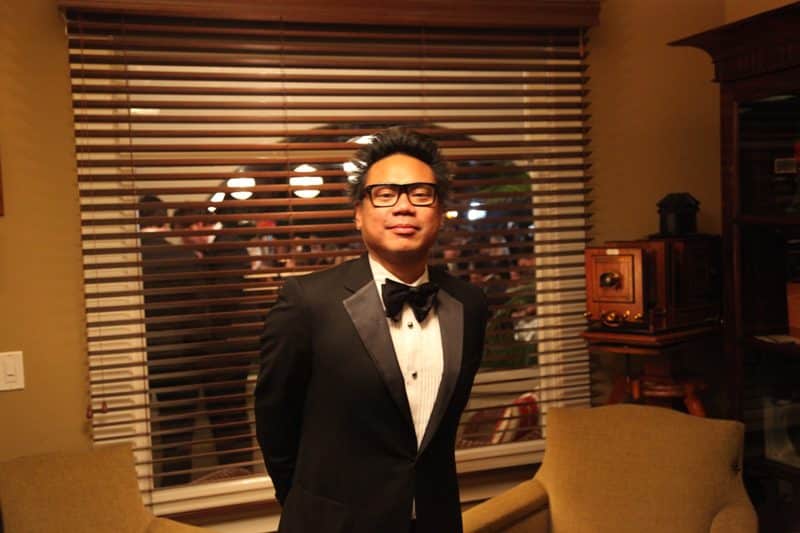
Winning an Independent Spirit Award for Best Cinematography in 2001 for “Requiem for a Dream,” as well as a Chlotrudis Award in 1999 for Best Cinematography for “Pi,” award-winning director of photography Matthew Libatique, ASC is best known for his work with frequent collaborators Darren Aronofsky, Spike Lee (“She Hate Me,” 2004; “Inside Man,” 2006; “Miracle at St. Anna,” 2009), and Joel Schumacher (“Number 23,” 2007; “Iron Man,” 2008). He has worked on over 30 films, as well as numerous music videos for artists including Tracy Chapman, Jay-Z, and Moby.
Matthew Libatique, ASC talks about what he looks for in projects, shares his experiences and insights, and discusses camera movement, color palette, and more.
What attracts you to a project creatively?
Matthew Libatique, ASC: Whether or not a story has something that I want to help say, that the story has a relevance. Those are the first and most idealistic reasons to do a film. I’ll be honest, sometimes it’s also to work with a certain director, and sometimes it’s just because you want to stay in town. But first and foremost especially at the beginning of my career I was able to pick projects on those first reasons than on the business logistic side.
I ask myself whether or not I’ve done it before. Do I have anything to give to this film? If I don’t, I’ll probably pass because I can’t do anything new with it. It’s not a challenge. It becomes paint by numbers if it’s something I’ve done before. And if it speaks to being something I’ve done before then I’m probably not the right person for it because somebody else who hasn’t done it is going to strive for much more. So I would pass on a script if I feel like I’ve done something like that before.
What was it like the first time you met Spike Lee?
Matthew Libatique, ASC: Well, that was a tough one only because he’s a hero of mine. When I was at Cal State Fullerton, “Do The Right Thing” came out, and I would have to say that movie inspired me to become a cinematographer. Only because I realized for the first time that filmmaking was actually an option. It was a revelation for me. I started looking at the Lee/Dickerson collaboration and then at Bertolucci/Storaro, which was the very next collaboration I studied because I realized in all honestly coming from New York, and the suburbs of LA, I didn’t really have an idea how you go about becoming a filmmaker. But when “Do the Right Thing” came out, it made people feel like you could come from almost anywhere and not only make a film, but make a statement, so it solidified the relationship between the director and cinematographer that didn’t dawn on me before. It was always about the director before, and it also made it feel like it was attainable by somebody like me. And for the first time I realized filmmaking was about social commentary as well as entertainment.
So when I met Spike Lee for the first time, I had all this baggage of who he was and what he meant to me. So it took everything I had to play it as cool as possible to try to make it peer to peer. Obviously, it worked out well because he hired me on that first film (“She Hate Me,” 2004), but it was one of the more nerve-wracking first interviews. But in relation to meeting any director whether it was Spike Lee or Joel Schumacher (“Phone Booth”), or Steve Gaghan (“Abandon”) or Mathieu Kassovitz (“Gothika”), it was really about having a conversation.
I think the responsibility of a cinematographer going into a meeting with a director is to understand the story as best as you possibly can, and ask questions about the story. In my experience if the director starts to ask you about camera and what your ideas are about camera, it’s an unsophisticated conversation. The sophisticated conversation to have is about motivation, and from the cinematographer’s standpoint, just like from the actors or the directors. It’s about the story, and the story will motivate the questions and eventually will motivate the look of the film. The screenplay is paramount to everything. After that it’s character motivation, and characters in general, and nuances and personalities of each character and what their arc is. That’s the conversation I want to have first because you run the risk of reading a script and being presumptuous of what that film means visually, and unless you are reaching for the heart of it you are going to miss the mark. And really good directors respond to somebody who’s got the heart of their story in mind. So my first conversations are always about story and character, and then it’s on me. The ball’s in my court, and I have to figure out some kind of visual language for that.
When you first read a script for a feature what are you looking for initially?
Matthew Libatique, ASC: I’m looking for whether or not I get it quickly and the overall feeling that it gives me. When I read “Phone Booth” for the first time, I think it was the quickest read I ever had. It read so fast and was extremely well-written and tight. I thought this is a very exciting and make-able film. Then it goes back to the reasons why I would take one film over another. Whether it’s relevant, whether there are characters I’m attracted to. There’s a variety of things. I wouldn’t’ say there are kinds of films that I would like to make or not like to make. But I look for social commentary – does it have something to say about us all, about our situation at this time or maybe a time before that relates to our time? Is it a futuristic script that is dealing with something now that’s at the beginning, whether it be cloning or something that interests me. I like Science fiction, and I enjoy films that have a kind of social commentary, and I consider how it strikes me on a humanistic level. If it’s a smaller film I ask myself, could it touch the hearts of a people? Is it based on a character I know or kind of know? Those kinds of things. Is it written with actual study, if somebody actually studied the subject and wrote about it intelligently so that there are no holes? I don’t’ mean story holes, I’m talking about if it’s a film about homosexuality, does this person know the homosexual world, do they know a homosexual person? If I feel like if they don’t, it could feel like it’s shallow, so I’m looking for a depth in the writing – do they know what they are writing about?
Regarding camera movement, is it the director who decides when the camera moves, or do you make suggestions regarding covering shots with movement?
Matthew Libatique, ASC: Sometimes camera movement is really born out of the situation at hand. There’s a stylized camera movement that takes you from one place to another, and there is movement that services the blocking of the actors – I’m a big fan of both. The shots that stylize the film are more predetermined, but the shots that are more motivated by the movement of the actors are maintenance within the body of coverage. That will allow you to create an energy to the scene because the actors are able to move. It can be a static shot that shows the whole space and everybody walking back and forth, or a shot that dollies from one place to another. Those two styles of masters are so different and one is born out of the blocking of the actors.
You take a master, like Woody Allen or Ingmar Bergman who brought the actors from the foreground to the background with a static camera, but the actors are moving. You take a look at a film like “Manhattan” which takes place in a small apartment, and all the action is happening in the foreground and the background and back into the foreground. An auteur like Woody Allen, or Spike could avoid the conventional coverage and say, I think this scene is one shot. Because they know where they can place so single shot scenes and commit to them. Now that I’ve been on more studio films, I see that’s rare. So many people need coverage and it gets tedious, and the camera movement is just used as another tool and technique to get you out with more interesting coverage.
Camera movement is a way to keep the actors in the scene longer. If the scene is three pages long, it would be nice if you could get the whole thing in one shot and make the shot count. If you move the camera and make each shot and each performance count, then you are engaging those actors to give it to you right then and there. Then you are actually getting the scene and you’re in it. Some actors are good between take 1 and 5. Others aren’t good until 10 to 16, and a director has to make that determination. As a cinematographer, you have to pay attention because you can’t light for somebody else’s shot if they are good in the later shots; you have to know where all the pieces fall. Or make that master count, then you have it.
Could you talk about the difference between what a dolly shot will give you and what a steadicam shot will give you? How closely are you watching the monitor when the steadicam operator is shooting?
Matthew Libatique, ASC: I wasn’t in love with steadicam until “Inside Man” where we used it a lot, and that was because it worked for the story. I was able to take one character and create a language with his camera and take another character and create his language with the other camera. It was born out of a necessity. I had established Denzel Washington’s character as a hand-held, multi-camera feel, so to juxtapose that to Clive Owen’s character, I had to come up with something that moved through the space as a single camera feel and steadicam was the call, and it ended up working really well. It’s taking your technique and giving it a purpose. Steadicam is just one of those techniques. To me, it’s like pushing your film or shooting reversal and cross processing or silhouetting everybody, it’s just one of the techniques you use. I don’t appreciate steadicam as a quick fix to a problem. Steadicam is not meant to stand still for 2/3’s of the shot; it’s meant to walk around. I have a problem when it becomes a directorial convenience because of time. Of course there are those moments when you panic because you’re trying to make the day. You throw the gloves down, the meter goes away, and everything is a 5.6, and you run. I think that it can be valuable. For a long time, I didn’t want to use it because I thought that would happen. But if you are a responsible cinematographer, and you are doing justice to the story, then it can be a great tool. If you are just not making your day, and it’s a panic tool, then you have far worse problems than just steadicam.
Regarding formats, what makes you decide between a super 35mm, or regular 35mm format, or even super 16mm over HD? Do you suggest format to a director based on the project?
Matthew Libatique, ASC: I like having a variety of formats to choose from, and they all serve a purpose. I don’t like this decision to be born out of economic necessity. If it works for the story so be it. If you’re doing Shakespeare with Kenneth Branagh, and you have $10 million, and you’re shooting it on video, then I have a problem. If you’re shooting an urban picture about a pimp with a drug problem, then I probably don’t have a problem. Certain stories lend themselves to certain types of formats. If it’s just out of economic necessity, then it’s a decision made out of desperation, and that works as a disadvantage to the film right out of the gate.
Have you shot any high def films?
Matthew Libatique, ASC: No, they wanted to shoot Ironman with the Genesis, and I had so much day exterior in that film that I preferred to work with film. I like to manipulate film to have a certain feel and look, and bake it in. That’s a term I hear used by visual effects people, like when you bake in a bleach bypass, post production people hate it because then they have to contend with it, and the computer programs don’t read grain on a bleach bypass level, so they want everything to be RGB so they can build the look later.
But I have a strong belief that those looks are genuine. I think if you look at the Genesis films, they only have a few ways to go, and most of the time they go with the higher contrast because it looks better on the screen with the DI. The only successful looking HD film I’ve seen is Zodiac, but that was an extremely visual director with an extremely precise cameraman, and they created a very beautiful look for that film. I’ve seen Flyboys, too much contrast, I’ve seen Superman which had a very clean RGB feel, which I didn’t want for Ironman. I wanted Ironman to have a juxtaposition of looks between environments, and I don’t think the Genesis would have done that for me. I don’t care what people say about the DI, and what you can do with the DI there are only so many ways you can slice it in that room before it doesn’t look real. I want films to look like films. I don’t want them to look like cartoons. There’s a button in Photoshop called posterize – I don’t want that button. I think that it takes people out of the story. I have strong feelings about the DI for sure, and I’m sure I will end up shooting with the Genesis or the Viper or whatever format comes next, but it has to be the right one for me.
What do you think about cameras like the Red?
Matthew Libatique, ASC: I’m very interested in it. The thing about the Genesis and Viper and Dalsa is their size. If I’m going to shoot in this format, why can’t it be smaller? They’re making Arri 235’s, a compact 35mm camera. The Genesis is as big as a Panavision Platinum, and it’s heavy. It’s not a small camera. The Viper is a little smaller. I’d prefer them to be smaller so they can fit in places.
Do you think there is a preconceived look regarding lighting for specific genres that must be adhered to? For example, lighting the romantic comedy, the horror film, the science fiction film, etc. Do you think as a cinematographer that you have to maintain a consistent look to what has been done before, or do you think that commercially you can go against genre and be successful?
Matthew Libatique, ASC: I’d like to think that you can deviate from the expected look of each genre, but there is something about making the films that doesn’t let you. I just got off of a comic book action movie, and I put a lot of pressure on myself to try to figure out how to make it look good. To elevate it in a way, and I have to say that because of visual effects and in large part because there are a lot of people involved. Genre movies in general aren’t necessarily auteur driven, unless you are dealing with one person you are not going to be able to articulate a voice. It’s like, why is the food so bland on a film set? Not everybody can eat spicy food, but everybody can eat bland food and put salt in it. That’s how cinematography is for genre movies. It’s like, okay, I’m serving more than one master. The director wants to do this, but these five producers think it should be this way and amongst those five, there are disagreements, and there are three versions. That’s not going to lead you to have a concise look to a film. When you realize the situation you are in, you have to embrace it and make the best film that you can.
Do you prefer primes or zooms? Are you also the camera operator, or do you prefer to work with an operator?
Matthew Libatique, ASC: I don’t have a preference with primes or zooms at this point unless we are shooting anamorphic. I think zooms are a part of film language these days, and people understand them. I don’t think they throw audiences off. Ultimately, the subjective viewpoint of the camera is accentuated by the zoom, and that can be a great benefit.
I like to operate a lot, but sometimes it gets to be a little too much when you are in a multi-camera situation. Because you can’t watch all the cameras; and if you are dealing with a tough schedule, and you need to stay ahead of the game, being an operator puts you in the game so you are not staying ahead of it. But I do both. It’s hard for me to find an operator I really like because it’s another person I have to communicate with rather than having the director communicate to me directly. I find it simpler to operate than having to step back and have that conversation be a three part discussion, but I’m not opposed to working with an operator. I’ve worked with some great ones. I think it’s something I’m slowly becoming accustomed to, although for the majority of my career, I’ve operated as much as possible.
In recent dramas, a lot has been done to alter to color palette of films, such as using bleach bypass to de-saturate the image and then add back tints of specific colors for each character. Or using different colors to separate different storylines. In the genre you often shoot in, the suspense film, does the issue of color palette come up?
Matthew Libatique, ASC: All the time. It’s a very early conversation, beyond getting to know the director, the chief responsibility of the cinematographer is to have discussions with production designers, costume designers and set dressers and say, what do you see for this film? Then I will either accentuate that based on what I would like to do for the film or how it will hurt it. If I’m largely thinking about a de-saturated look but with color separation, and they show me a palette that is very similar and basically melds together, I’ll tell them that for a film that is going to be de-saturated with higher contrast those colors are all going to blend together so more distance should be created in that tonal range.
Then you just go by character. In Requiem, it was a very easy delineation between summer, fall and winter, and the color of the light deviated the moods of those time periods. So palette is one of the first conversations I have with the director, and then knowing how to articulate that with what you want to do visually is the other part of that conversation.
Is the color palette something the director is coming to you with or an interpretation you are having with the script?
Matthew Libatique, ASC: Most of the time you are coming into a color palette, then maybe you will alter it, but there is already a color palette that has been thought about because the production designer comes on the show so much more ahead of the cinematographer in pre-production, so they have already thought about palette. So what I’m thinking about is the texture of the film and how colors will be rendered, so then I have to articulate to the production designer and director how those colors are going to shift based on what I’m doing to the film. Sometimes I’m at the genesis of the color palette. On “The Fountain,” for example, I was in on very early conversations and the color palette was determined by myself, Darren, the director, the production designer and even the visual effects guys, and that palette was strictly adhered to by all of us. In the film I’m about to go shoot now for Spike, the palette was pre-determined. But on a film that’s stylized the palette is controlled, you’re going with cooler or warmer colors, but then you are staying within a realm. It’s a question of taste really. You look at some really broad comedies, some worse than others, colors are running rampant, and then wardrobe can be the chief offenders of everything. It can be distracting. I’ve been on commercials, and I say that shirt should go off the set. You have to be police of the pre-determined palette. The director could have too much going on, so you have to be aware of it as the cinematographer. The palette is part of the visual storytelling.
Are you doing tests prior to production?
Matthew Libatique, ASC: I do, sometimes. On the “Number 23” the designer painted wood various colors, and we shot it and decided what worked. Any test is looking at the colors. In that house, the interior is painted red, and we basically tested 16 shades of red for that film. On “The Fountain,” I worked a lot with certain color temperatures and how they render on film stocks, taking a tungsten stock and rendering cool white fluorescents versus warm white fluorescents or something that’s at 2500 degrees Kelvin versus something that’s at 5000 degrees Kelvin and how they render in the same frame together is important to me. I use a lot of color temperature readings, and I use that to render certain colors. Then I’ll shift those colors. If something is 5000 degrees on tungsten film goes a little blue it’s also going to render a little magenta, so maybe I’ll add a little green to it, and I’ll put green on the lights and make the kinoflos 5500 degrees. It’s part of the craft, trying to keep that palette as disciplined as possible.
Jacqueline B. Frost teaches cinematography and advanced film production at California State University, Fullerton, and regularly teaches cinematography for directors through the UCLA Extension. Jacqueline has shot numerous short films, independent feature films and documentaries that have screened in film festivals around the world. She has also taken on the role of Producer, Director and Editor on many projects. Jacqueline continues to freelance as a cinematographer in the Los Angeles area.
Featured in StudentFilmmakers Magazine, January 2008 Edition.
Sign Up for your own subscription to StudentFilmmakers Magazine.
- Click here to sign up for the Print Subscription.
- Click here to sign up for the Digital Subscription.
- Click here to sign up for the Bulk Subscription for Your School or Business.