Post Production Insights with Cara Silverman

by Kim E. Welch

Film editor Cara Silverman, who has edited both mainstream films and small independent features, completed work on the films, The Greatest, and He’s Just Not That Into You.

The Greatest is an independent film written and directed by first-time director, Shana Feste, and stars an ensemble cast that includes Pierce Brosnan and Academy Award-winning actress Susan Sarandon. The Greatest premiered in competition at the 2009 Sundance Film Festival and was nominated for the Grand Jury Prize in the dramatic category.

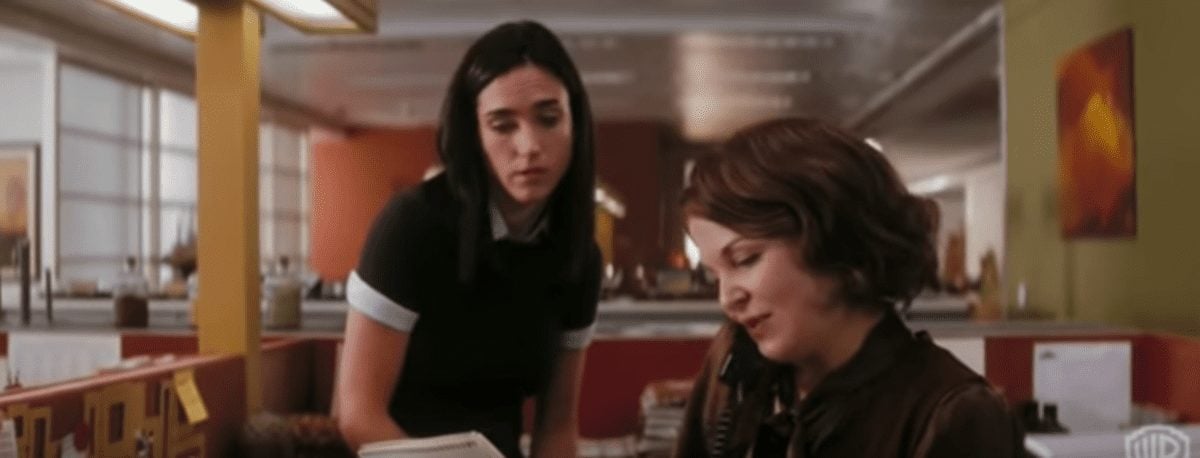
The mainstream comedy film, He’s Just Not That Into you, directed by award-winning and industry-renowned director Ken Kwapis, also stars an ensemble cast with Ben Affleck, Jennifer Aniston, Jennifer Connelly, Kevin Connelly, Bradley Cooper, Drew Barrymore, Ginnifer Goodwin, Scarlett Johansson and Justin Long.

Both films were shot by the eminent Director of Photography John Bailey, ASC.

Cara Silverman, at the StudentFilmmakers magazine headquarters in New York, candidly chats about her work on the two films, sharing a little bit of the behind-the-scenes in post, including working with John Bailey, ASC. Silverman also shares a couple of editing tips and tells us what she really thinks about editing programs.

You said you’re an Avid user.

Cara Silverman: I started on Avid. One of the first films I was upgraded to be an editor on was a film called, A Bronx Tale, and we had a very early version of Avid. We had already started cutting on film, and had convinced Bob De Niro to try Avid… It was great. I fell in love with it. But we actually ended up finishing the film on film because we were half way done editing.

In features, we use Final Cut as an adjunct to Avid. Although some features are being cut on Final Cut, we use it as an adjunct to the QuickTimes, and when we do the turnovers to sound, or to visual effects. But for the most part, features are still cut on Avid.

Some people say certain editing programs are not really appropriate to use for editing features. Does it really matter?

Cara Silverman: It doesn’t matter. It’s whatever you’re familiar with, and whatever your comfort level is with the program. If you’re comfortable cutting a movie on iMovie, cut it. It’s the idea of just getting your idea across. Don’t let anybody tell you that you can’t use any specific software. Whatever you feel comfortable with, you cut with. And then you deal with translating it to whatever media you need to get it to after the fact. Because there’s always a way to translate it. You can eye match, you can re-digitize, you can do anything you want. But cut to get your vision told, and deal with translating it later. Don’t let anybody tell you can’t do anything, or that can shut you down. The most important thing is just go ahead and express yourself; however you’re going to tell your story. If it means mounting your camera up on a two by four, and animating the pictures or the little models yourself, go ahead and do it. When we were kids, that’s exactly how we would do it with a Super 8 camera. But shoot, cut, do your sound any way you want.

Do you see any changes or direction in the industry in regards to editing programs?

Cara Silverman: It depends on what the filmmakers invest in, and a lot of times directors own the Final Cut program, so they want to be able to look at cuts on their own and dependent on their own computers. So it’s easier for the editors to be cutting on Final Cut. It’s whatever the comfort level is.

For He’s Just Not That Into You, basically, we would have digital dailies at night, which films don’t actually do that much anymore. The director Ken Kwapis very much wanted to have a community feeling on the film. So we would all gather at night and watch the previous day’s film. I would have screening notes in front of me, which my assistant would prepare, which would list out all the footage that we would be screening that night. And I would take notes, and Ken would tell me what performances he liked in the various sets of takes. And I would do my best to incorporate what he wanted. But basically, it was up to me to put together the first cut in a way that made sense.

And the first cut that the editor puts together is usually the ‘kitchen sink version;’ it’s the longest version of the cut. So you try to employ as many of the angles, and as many of the choices, that the director would like to use, barring any unforeseen problems. And it’s up to you to really put it together.

What they’re interested in is seeing your perspective on what the film is. Part of the artist being a good editor is really intuiting what the director wanted in the first place. And the other part of being a good editor is bringing in another fresh perspective to it, and using material in a way that they never even thought of.

So when I put together scenes, I’ll usually put together multiple versions, and have alternates to show them in addition to a standard of starting with the wide shots that go to the medium, then the close-up. Sometimes a scene or transition will say, well, go start it on the close and play the scene out on the close until it feels right to be in the looser angle. The footage basically tells me how to cut it.

The footage tells you how to cut it?

Cara Silverman: I’ll watch the footage again and again and again until I have an idea of what’s the best way, the most coherent and creative way to put the scene together. I don’t just cut to cut. You’re cutting to tell a story. Sometimes it means staying on a shot. Basically, I’ll make the first pass, then I’ll look at it, and I’ll refine it. And then, I’ll refine it [a few more times]. Certain directors want you to show them the footage half way through. You show them your cut footage, and they’ll either give you adjustments or not. In the same way that a DP or production designer is bringing their creativity and their sensibilities to the project, you as the editor are bringing your creativity and your sensibilities to the project.

So you’re living in LA now?

Cara Silverman: I do, I live in LA. I have been living there for about six years now permanently.

What is the LA scene like as opposed to New York City? Do you think one is better than the other?

Cara Silverman: Well, I originally went out to Los Angeles because at the time when I became a young editor in the mid-90’s, there wasn’t a lot of work. There were a lot of people who were becoming editors at the same time that I was. They were either editors who were above me who were taking all the low budget films. I had cut a couple of low budget films. I cut a film called Jeffrey, and then I cut a film called Party Girl. And then, it actually got a little difficult to get work. In ’98 or so, there was some kind of writers’ strike, something had happened. So I went to California, and it was just easier to find work out there because there was just a lot more work.

But I came up in New York in the film industry. I was an apprentice, then I was an assistant and young editor in New York. But in terms of sustaining yourself, it was just harder to do it here than it was in Los Angeles.

So, currently that may not be the case is what you’re implying?

Cara Silverman: I don’t actually know that that’s the case right now. There’s less competition now. There are sound houses that have folded here. I still think as a whole that there’s more work in Los Angeles, just because the whole town is centered around the business, as opposed to here. I think that there is less larger budget work here in New York. There’s a lot more smaller budget work, and there’s more TV work here in New York.

Did you go to school to learn film editing?

Cara Silverman: I most certainly went to no school for film. I apprenticed. I went to American University and thought I’d be a political scientist. I actually got out of school and got a job working at public television as a researcher. I started hanging out with some of the documentary crews and the editors. And finally, they took pity on me and hired me as an apprentice. I never knew a sprocket from a frame. I apprenticed myself.

That’s great. What would you say is something you might recommend people do or don’t do when they’re editing, let’s say, an indie, or when they’re learning editing?

Cara Silverman: The most important thing is ‘take your time.’ Because you’d be shocked at how many times I give assistants scenes to cut, and they come back a half hour later, and say, ‘I’m done.’ [laughs] Because people just rush, they just rush and get through, and think it’s a race. It’s not. There are so many different ways you can put together a scene. Be really patient, and take your time to make sure your sound sounds good. It’s being patient and making sure you explored all your options. ‘Patience’ because – editing is not just about matching action. It’s about telling the truest story. It’s respecting the story as it’s being told. Part of cutting a film is letting the film speak to you and tell you what to do. But also, you’re getting notes from the director, and you’re getting notes from the director through the script supervisor if they’re on location and you’re not.

Could you give an example?

Cara Silverman: I just cut this film called The Greatest, where I was California, and they were shooting in New York; and I was getting the film three days after they had finished shooting the scene. I had to go through the footage very quickly. So, basically, I’d get the script supervisor’s notes, which would say, this would be the circle take. But I was on my own; I wasn’t talking with the director very much because they were three hours ahead of me. Based on what I could define from the notes, I was basically putting it together how I felt it should go together because I didn’t have the benefit of having the director there to talk with.

Did the director then send you notes?

Cara Silverman: No, I wouldn’t get notes. I would get the script supervisor’s notes and line script – which is a script that follows the setups and the takes. For every setup that’s recorded, there’s literary a line down the page. It starts where the action starts, and it ends where the action ends for every setup.

So, for example, you can have a script, and it’ll say, 24. And then it’ll start up here and then go down to here, because that’s where the action is where that setup ends. And then, 24 Apple could maybe go over there. And the 24 setup could be the wide shot, and the 24 Apple could be the medium shot, and the 24 Baker, let’s say, is a close-up. So, I have a copy of that.

What’s known as the facing page is a page breaking down what those lines mean. So 24 Apple would be wide shot, and a description of the action. It’ll list out every take. And the take numbers will be circled – which ones are preferred. And it’ll give you the timing, the lens, and it’ll give you all the information so that you can go back technically and reproduce that shot from the script supervisor’s facing page. And it’ll tell you – they blew this line, or it was a great take. Dolly bump at such and such a line. It’s the script supervisor’s log on everything that happened on everything that got shot.

So I get copies from that, and from that, what I’ll do when I’m far away from the set is ask the script supervisor to ask the director what they liked about the takes, and to give me as much information on those facing pages as they possibly can. So that I can assemble as I’m going, hopefully, what they liked when they shot.

For the film, He’s Just Not That Into you, at what phase did you start the project? What phase were you brought in, and how did that happen?

Cara Silverman: I was brought in before shooting started. I was interviewed by the director, who responded to my resume, and I was on from the get-go, from about two weeks before principal photography. It depends. Certain films, I’m hired two months before or three months, four months before. It depends on when the filmmakers get the green light. I was in attendance for a lot of the pre-production meetings. One thing I like to do, is I like to get all the shot lists, and see what kinds of transitions they’re thinking of. Unless it’s a low budget and they can’t afford you, we’re pretty much brought on before principal photography commences.

We notice John Bailey, ASC was the director of photography for both of the films you recently edited – The Greatest and He’s Just Not That Into You.

Cara Silverman: We worked very closely with John. That’s something that I learned as an assistant – to work very closely with the camera department. The camera department and the editorial department have to rely on each other very much. There’s a lot of give and take between our departments. And so if I’ll need footage, protocol says that you go to the director first. But sometimes it’s interesting to find out why they made the decision on the set not to shoot something a certain way. All the departments are co-dependent on each other.

And that brings up something else. As far as the color, the palette, and the color timing, did you work with the DP or the art department for the film, He’s Just Not That Into You? Do you work with those elements?

Cara Silverman: We do. What usually happens is the negative’s exposed. In the old days, they’d make a one line print. These days, we usually have digital dailies. We were projecting, I think, DVCam dailies. It was just a basic one-light, and then, if we needed to darken something or lighten it, we would do that, and then, we’d re-project it again. Based on the dailies that we projected, that was what loaded into the Avid.

For the film, He’s Just Not That Into You, during the final process, did the DP come in and look at anything?

Cara Silverman: Yes, we did a DI, so we had extensive color timing. Any process of color grading the film is extensively timed. And it’s a process between John Bailey, the director, and myself. And in this case, a place called Company 3, which is where we did the DI. But it’s extensively color timed. What you’re basically going for are the truer colors; you want the richness. Because John is a really wonderful lighter, and that’s what he’s renowned for, is his wonderful lighting. So he brings a very unique feel to it. So there’s lots of shadows. You see it in He’s Just Not That Into You, but going way back in his career, something like Ordinary People is a perfect example of very precise lighting and timing.

John is very, very specific on how he lights. There are a lot of shadows built into things. He deliberately sets up shadows, which are very beautiful. One of John’s signature shadow moves is setting it up so that it looks like you’re looking through a window. It’s magic hour, and a window is casting its shadows through the light through the panes. You see the shadows through the panes, it’s beautiful.

If you could fill in this blank… A lot of people are shooting anamorphic in comedies because…

Cara Silverman: …In comedies because you can physically see more. Let’s say you want a frame and it’s a three-shot, and you want three people in a medium shot or in a medium close-up shot. You can get all three without compromising your east and west in an anamorphic frame, in a much more pleasant frame, than say in your standard 1-8-5. Hi def more or less mimics it. And inevitably, we’ll be going to DIs. It’s just a much more complimentary frame when you’re shooting and you know you’re going into a DI.

Also, physical comedy works better in a wide screen. Because physical comedies are usually funnier when it’s not cut and it’s in a wider screen when you’re actually screening. You actually see all the stuff this person does. Dramas are more going wide screen now, but usually shoot 1-8-5. Although I think you’ll see much more films shooting anamorphic – even standard dramas just because we’re going to digital intermediates. And certainly any of the horror films that you see. A lot of the films with a lot of visual effects shoot with anamorphic. Because you have a lot more of the frame or a lot more of the image to work with when you’re working with digital effects.

Featured in StudentFilmmakers Magazine, March 2009 Edition.
Sign Up for your own subscription to StudentFilmmakers Magazine.

  • Click here to sign up for the Print Subscription.
  • Click here to sign up for the Digital Subscription.
  • Click here to sign up for the Bulk Subscription for Your School or Business.

About Us

StudentFilmmakers.com is where creatives grow. Learn filmmaking, connect with industry pros, and access tools, contests, and inspiring educational resources.

Advertisers

Sign up for our Newsletter

Discover exclusive access to free webinars, hands-on workshops, and cutting-edge insights into emerging technologies and workflows. Sign up with the form above to stay ahead in the fast-evolving world of filmmaking.

Scroll to Top
×