Having a Fling with Flare: Image Cues Can Be Subtle, but Strong… by Ira Tiffen

Reference: StudentFilmmakers Magazine, September 2007. Having a Fling with Flare: Image Cues Can Be Subtle, but Strong… by Ira Tiffen. Pages 20.

Gliding. Up, up and awaaaaay! Exhilarating as it is, only the camera gets to really go along for the ride – not your audience. Making them feel they are part of the action is part of your job. Doing that best requires being able to insert the right image cues. Image cues are what filter effects are all about.

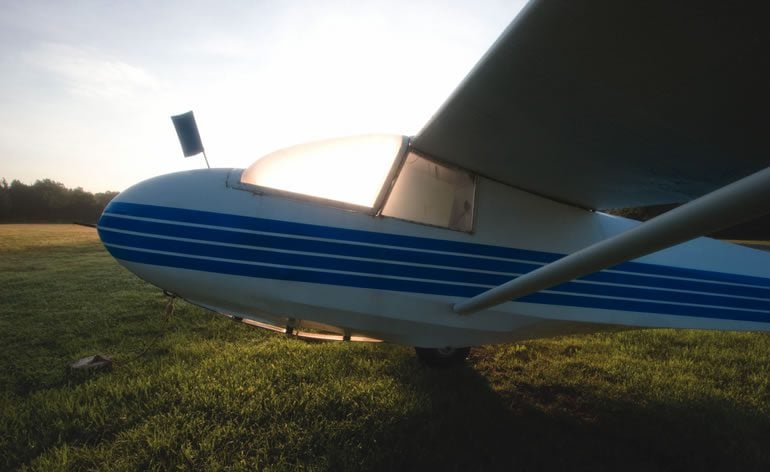
Coming up on the glider as in our example scene, the sun is coming up, too, behind it. Its brilliance literally bursts through the dew-drenched canopy. But, in the original, unfiltered scene, it is more seen than felt. Here, the upper edge of the glider, from nose to canopy to wing, cuts a clean, hard line against the silver-bright sky. We want to somehow portray the eagerness with which the glider is facing another trip aloft, an extension of the pilot’s own emotions as we visually follow along with him.

We can do that here by blurring the line a bit between the glider and its intended destination. In the second, filtered scene, a Schneider Black Frost #2 softly flares the highlights, surrounding the canopy and the rest of the upper edge of the glider as well, with a subtle glow. The glider now becomes more as “one” with the sky; its formerly distinct edge blending with its background. The effect of the sun on the viewer is more palpably felt than before.
While this effect doesn’t command your viewers’ attention by its presence, its true strength lies in its subtlety. The mind picks up these image cues in the background and adds them to what it already knows. And such small things add up to make a big difference in the full message imparted by the finished image.

There is another, technical lesson from this example. The filter, creating flare and reducing contrast, does so by a re-distribution of light. And where there is more light for it to work with, it does more. So, you can see that where the dark line of the glider meets the bright sky, the effect is greater than under the glider in its shadow on the grass, where the luminance values are all lower. This knowledge will help you in deciding how to frame a scene, and when choosing effect grades. Brighter scenes may need a lower (weaker) grade. Lower contrast scenes may require a stronger grade. And, panning from bright to dark areas may cause a shift in the result that you will want to plan for, and so on.

When reaching for the sky, remember to keep a firm grasp on your traveling companions, filter effects – you’ll take your audience higher and farther than you would going it alone.

Photos by Ira Tiffen.
In over 30 years of making optical filters, Ira Tiffen created the Pro-Mist, Soft/FX, Ultra Contrast, GlimmerGlass, and others, netting him both a Technical Achievement Award from the Academy of Motion Picture Arts and Sciences and a Prime-Time Emmy Award. Elected a Fellow of the SMPTE in 2002, he is also an Associate member of the ASC, and the author of the filter section of the American Cinematographer Manual.

About Us

StudentFilmmakers.com is where creatives grow. Learn filmmaking, connect with industry pros, and access tools, contests, and inspiring educational resources.

Advertisers

Sign up for our Newsletter

Discover exclusive access to free webinars, hands-on workshops, and cutting-edge insights into emerging technologies and workflows. Sign up with the form above to stay ahead in the fast-evolving world of filmmaking.

Shopping Cart
Scroll to Top
×