The Rehearsal Process during Production: Making it Work: Getting the Best Performances Out of Your Actors by Myrl Schreibman.
The director is the only one who directs actors on a movie project. Not the cinematographer nor the producer, nor any other member of the production team has that responsibility. And it is directors who must do everything they can to elicit the right performances from the actors to bring the characters to life.
Differences in Stage and the Movies
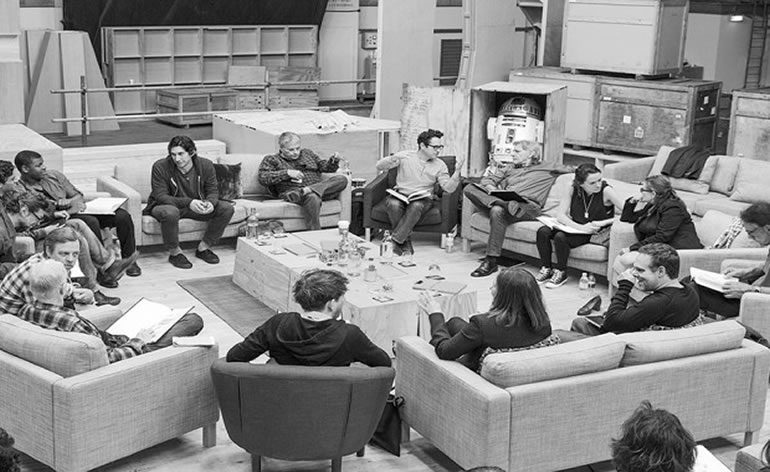
On stage, directors rehearse. And it is through the rehearsal process on stage over periods of weeks and sometimes months that the actors finally find the essence of the character. Rehearsal is part of the budget for theater producers.
But with movies, unless your producer provides the money for some rehearsal time with actors, there is no rehearsal.
No slow introduction of production reality to help the actors. No working through and culling the depths of the character before the myriad of production people in jeans and t-shirts begin their work. And, no great exploration
of the depths of the characters.
In fact, unless you have a read-through of the movie with your actors, you will never have all the actors together at the same time. And, your actors may have to be paid for that read-through since the Screen Actors Guild mandates that actors be paid when they start work. And a read-through is considered work. So movie directors should learn to rehearse actors during the process of production and get the performances they want.
Importance of Casting
One way to ensure the performance is to cast right. Since the closer the camera gets to the actor, the more truth it is going to tell. Try to cast actors who use a piece of themselves to create the character.
Ryan Gosling says that “I don’t become characters. They are all me.” In his new movie, Lars and the Real Girl, he had to get rid of all of his posturing and ideas as what makes himself cool and charming and turn up the more vulnerable parts of himself.
Something his director Craig Gillespie worked with him on.
But having rehearsal time in a professional situation is a luxury. So directors have learned the technique of rehearsing on set during production.
Use A Floor Plan
First, using a floor plan, they map out the basic choreography or staging of each scene taking into account the motivation of the actors and the camera coverage for the scene.
Choreograph for the Director of Photography and Crew
Second, understanding that the director of photography, assistant director, continuity person, and production crew must “see” the choreography before they can provide their individual contribution to the scene, directors stage the basics of the scene with their actors as soon as they can on the production day trying not to “rehearse” towards performance. It is later in this process that directors refine the nuances of the staging to assist the actors in finding their character in the scene. It is also now that directors and cinematographers determine the first shot of the sequence.
And once this is done, and actors are excused to go-to makeup and wardrobe, stand-ins replace the actors while the technical crew goes to work to set up the lights and camera for the scene.
When the actors leave the set, they may be discussing the scene from their characters’ standpoint while directors will discuss the visual concept with the cinematographer to make sure they are both on the same creative page for the story. And if directors need to, they can then rehearse with their actors off to the side while the crew is setting up. But these rehearsals are usually those of the interpretative aspects of the characters since the actors are away from the set and will not “feel” the reality of the scene.
* Directors want to make sure that the actors’ performances are done when the camera is rolling and not before.
Bring it Together
When the first assistant director tells the director that everything is ready on the set, then the directors and the actors move to work in front of the camera. And this is where the work between the director and actors comes together while all eyes are watching. This is when directors are refining the staging and the nuances of the scene, while at the same time rehearsing the shot and letting the actors get used to the technical environment while concentrating on their performances and inner character for the story.
Don’t Over-Rehearse
Directors must never over-rehearse the actors at this point. Otherwise, the actor will give that “brilliant” performance before the camera has had a chance to role. The little bit of adrenaline and energy that the actors should feel at this point is important.
It is akin to the feeling they get just before the curtain goes up on a play. It is creative energy waiting to be released!
It usually results in strong performances and is exactly what directors want as they get into the scene.
Pre-Plan, Choreograph for Crew, Refine and Shoot the Shot
This rehearsal process during production always works if you adhere to the procedure: pre-plan; choreograph for crew to see; excuse the actors to work alone or with you; come back to the set and refine rehearsal for the shot; and shoot the shot. It saves a lot of time, gets the crew and actors all on the same creative page quickly, supports the actors’ egos and their performances, and keeps you in creative control the entire time. It also allows you great latitude to be inventive with the scene and the actors’ performances since all is ready when the actors are called back to the set to do final rehearsals and then shooting of the shot.
Myrl A. Schreibman is a Producer/ Director, professor at UCLA Film School, and author of the book, “The Film Director Prepares, A Practical Guide for Directing Film and Television.”