In today’s media ecosystem, filmmakers and content creators compete for milliseconds of attention. Whether you are cutting a feature film, producing a commercial, or sharing short-form clips on TikTok, your audience has infinite options and a thumb poised to scroll away.
StudentFilmmakers editors and community members repeatedly stress that you must hook your audience immediately. In screenwriting, the first 3 to 5 pages should grab your reader. In a movie, the opening scene must spark curiosity. On social media, you have only 3 to 5 seconds before viewers swipe away. This article distills advice from StudentFilmmakers articles, forums, and on-demand courses to help you master micro-attention and keep viewers engaged.
Do make your very first frame impossible to ignore, with clear stakes, emotion, or surprise that directly serves your story.
Do not waste a single second on logos, long fades, or rambling intros that do not drive the hook or payoff.
Why Hooks Matter
A hook is the moment that pulls your audience in.
Sherri Sheridan’s “40 Basic Plot Points for a Feature Film” starts with one simple rule: “Start in the middle of a mess to hook audience fast.” That opening jolt of conflict pushes the viewer to keep watching.
In her three-act writing guidance, Paula Brancato calls the protagonist’s early “false hope” the hook, the “uh oh” moment that makes the audience gasp and lean forward.
In “Create an Effective Hook… And Keep Them Watching”, Jared Isham reminds filmmakers that in the streaming era viewers bail fast if the first scene does not intrigue them, and that on social media the hook has to work within a few seconds.
Hooks are not just for fiction. In the StudentFilmmakers forums, a behind-the-scenes TikTok tutorial recommends showing the end result up front to make viewers curious. Another filmmaking manual discussed in the forums notes that your project’s logline should be a single sentence that hooks your audience and makes them want to watch your film. A strong concept distilled to protagonist, conflict, and stakes motivates viewers to invest.
The Attention Economy
Why are hooks so critical? Because we live in an attention economy. Social platforms algorithmically reward content that holds viewers, and film audiences can abandon a story instantly.
Isham points out that many trailers front-load supercuts of explosions before showing any story. He argues that instead of teases and logos, you should make the first five seconds leave viewers wanting more. That means starting with your most dramatic moment or conflict, not your credits.
On social media, a quick question or mysterious image can be enough to stop the scroll, but you must deliver on the promise or viewers will leave. Empty clickbait teaches your audience not to trust you.
Do treat attention as your most expensive resource and design every opening shot to earn it.
Do not assume your title, thumbnail, or reputation will save a weak first five seconds.
Hook Techniques for Short-Form Video
To capture micro-attention, combine storytelling principles with platform-specific tactics. These methods reflect recurring advice in StudentFilmmakers articles and community discussions.
- Show the payoff first. A TikTok behind-the-scenes tutorial from the community advises creators to start with a hook and show the final effect first. Flashing the finished visual effect immediately makes viewers curious about the process. That subtle foreshadowing keeps audiences watching to discover how you did it.
- Start with conflict or catastrophe. In “Create an Effective Hook… And Keep Them Watching,” editor Jared Isham describes opening a documentary with the film’s most catastrophic event to make viewers instantly ask “what happened?” Begin with your story’s major conflict, then build context. The same pattern works for short-form videos: start with the problem, then show how you solve it.
- Ask a direct question. A simple, pointed line such as “Stop scrolling if you want your next video to blow up” invites viewers to engage. Forum contributors note that even longer videos can succeed if they open with a short, intriguing line. Aim your questions at your audience’s pain points or desires, and then actually answer them.
- Craft a compelling logline first. Before filming, write a one-sentence logline that hooks your audience. The forums define a logline as a powerful concept in one sentence that includes the protagonist, the conflict, and what is at stake. This forces you to identify what makes your idea interesting and ensures your hook communicates that clearly.
- Use pattern breaks and quick cuts. Visual surprises stop viewers from scrolling. Whip-pan transitions, sudden zooms, jump cuts, or abrupt changes in music can jolt attention. Combine them with on-screen text to highlight key words, emotions, or jokes so that even muted viewers understand the hook.
- Leverage vertical composition. In “Adapting Your Video to TikTok”, Bart Weiss shows how to set up a 1080 x 1920 timeline and adjust framing in DaVinci Resolve for vertical viewing. Shots framed beautifully for horizontal 1920 x 1080 often need reframing for vertical. TikTok and Reels viewers expect vertical videos, so cropping or reframing your footage will make the hook look intentional instead of squeezed.
After the Hook: Structure and Clarity
Once you have captured attention, keep it by telling a concise, coherent story.
Paula Brancato stresses that Act I should set up the protagonist and then “BAM,” the inciting incident blows them out of the water. The viewer’s false hope at this point becomes the hook that pulls them deeper into the story.
Translate that structure to short-form video:
- Hook: 0 to 3 seconds. Grab attention with conflict, surprise, or payoff.
- Setup: 3 to 10 seconds. Clarify who you are, what is happening, and what the viewer will get.
- Escalation: 10 to 30 seconds. Add detail, tension, or transformation.
- Payoff: closing seconds. Deliver the promised result, insight, or emotional beat.
Do not overload your video with multiple unrelated ideas. Focus on one clear conflict and resolution so that the viewer always knows why they should keep watching.
Practice and Experiment
Hooking an audience is a skill that requires repetition and honest feedback.
Isham advises creators to use social media as a low-stakes laboratory: experiment with different openings, track which posts retain viewers, and iterate. Failing on TikTok or Reels costs little but teaches you what resonates. Over time you will develop an instinct for what grabs attention in your niche and what makes your audience scroll away.
Do post often, analyze your retention graphs, and refine your hooks based on real data.
Do not cling to one “perfect” style if your analytics show that viewers keep leaving in the first five seconds.
Production Tips: Lighting and Audio
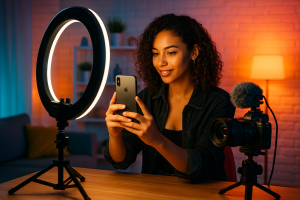
A strong hook will falter if your video looks or sounds bad. Filmmakers in the StudentFilmmakers forums frequently share practical production advice.
- Use natural light wisely. Shoot during golden hour when possible, and use diffusers or reflectors to soften harsh sunlight. Position your subject facing the light for a flattering, readable look that supports your hook rather than distracting from it.
- Stabilize your camera. Tripods, monopods, or gimbals prevent shaky footage and let your hook shine. The on-demand course “Discover the Art of Composition and Framing” goes deeper into framing and stabilization techniques.
- Record clean audio. Dialogue and sound effects reinforce the hook and keep viewers engaged. External microphones and quality audio adapters can reduce hiss and improve clarity. Tools such as the Beachtek DXA-MICRO PRO+ audio adapter help you capture clean, hiss-free audio and connect professional microphones directly to your camera.
Further Learning
If you want to dive deeper into filmmaking fundamentals, explore these on-demand courses and webinars from StudentFilmmakers (all hosted on the studentfilmmakers.com domain; some links may redirect to a login page for members):
- Film/TV Director Patrick Cady, ASC: Managing the Set – learn how to collaborate with crew and run an efficient set (about 1 hour 50 minutes).
- Working with Actors: A Director–Actor Playbook – guidance on communicating with actors and eliciting authentic performances (about 1 hour 40 minutes).
- Virtual Shadowing: Navigating Television Production – go behind the scenes of TV production and see how departments work together (about 1 hour 30 minutes).
- “Director’s Prep” with Emmy-nominated Film/TV Director Patrick Cady, ASC – learn how to prep projects and plan shots (about 1 hour 20 minutes).
- Build Your Cinematic Style with Shane Stanley – establish tone, visual language, and storytelling for your projects (about 1 hour 20 minutes).
- Behind the Scenes with Nancy Schreiber, ASC and Dan Ayers, SOC – explore cinematographer and camera operator collaboration (about 1 hour 20 minutes).
- Inside the Film Industry with Shane Stanley – get strategies and insider insights for emerging filmmakers.
- “Prepping the Vision” with Patrick Cady, ASC and Tom Bernardo – learn about previsualization and aligning director and producer goals (about 1 hour 10 minutes).
- Unleash the Power of Action Sequence Photography – design and shoot dynamic action sequences (about 1 hour 8 minutes).
- On Set Safety Course – focus on safety protocols so your set stays efficient and safe.
- Discover the Art of Composition and Framing – dive into composition, framing, and stabilization.
- Embark on Your Cinematographic Journey – learn cinematography basics in an introductory course.
- How to Create Look Books – develop visual look books to pitch projects and communicate your vision.
- Documentary Video Editing – get tips for cutting documentary footage and shaping real stories.
- Post-Production and Dramatic Video Editing with Bart Weiss – explore dramatic editing techniques.
- Basics of Color Correction in Post-Production with Bart Weiss – learn fundamental color correction skills.
- Bethany Rooney and Patrick Cady, ASC – Directors Tell the Story – hear two directors discuss storytelling from their perspective.
- Crafting Tension on Screen with Shane Stanley – focus on building tension and suspense (about 1 hour 30 minutes).
Join the Community
StudentFilmmakers is more than a magazine. It is a community where filmmakers of all levels connect, collaborate, and learn. Participating in the forums and the main site can give you feedback on your hooks, insights into new trends, and access to webinars, contests, and premium resources.
Whether you are adapting your film for TikTok or polishing a feature screenplay, leverage the StudentFilmmakers community to refine your craft and test new ideas in front of a real audience.
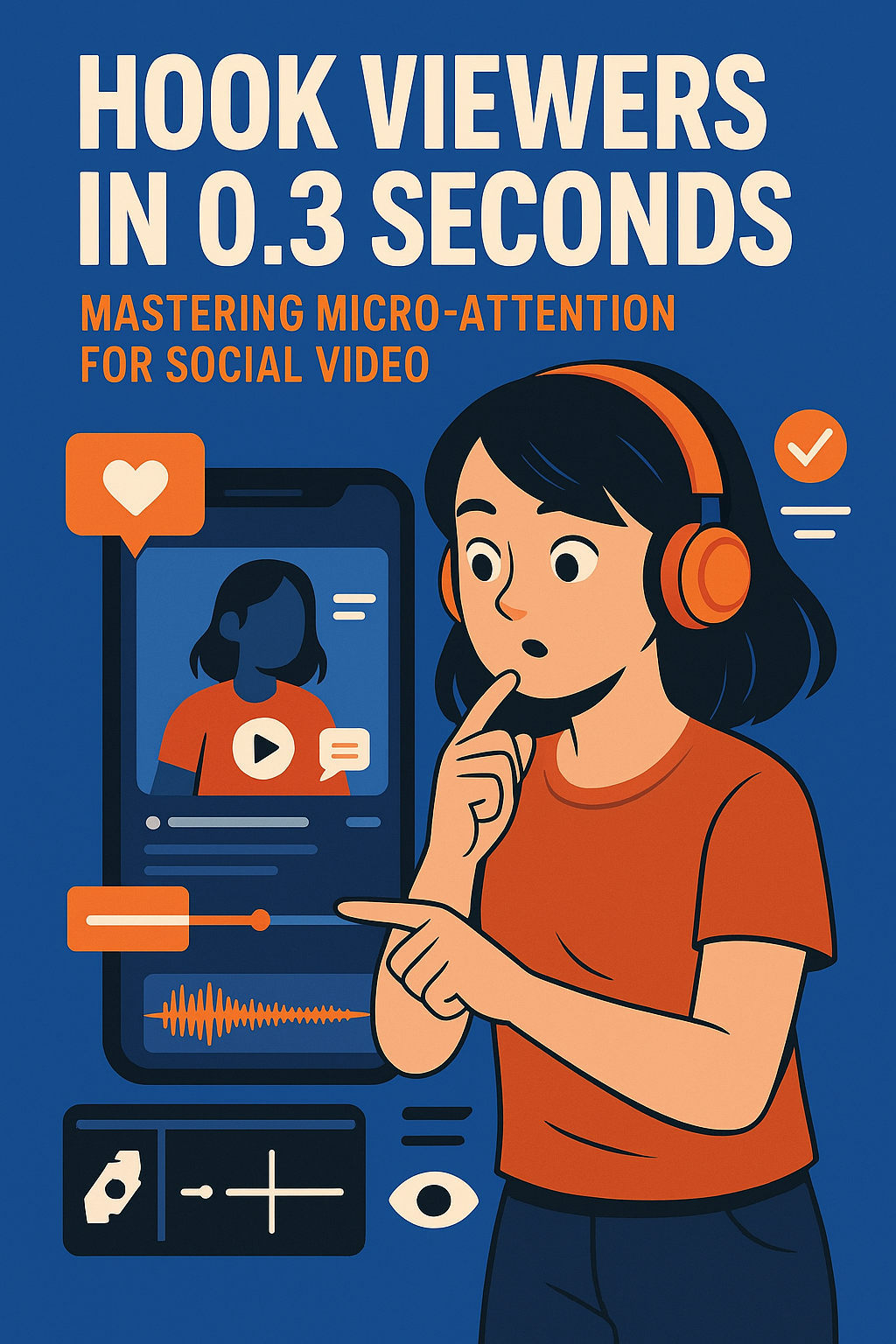
By applying these strategies, crafting compelling hooks, structuring concise stories, maintaining production quality, and continually learning, you will maximize the first seconds of your videos and keep audiences watching. The next time you hit record, remember this simple rule: those 0.3 seconds are your chance to make viewers lean in, not swipe away.